hankyoreh
Links to other country sites 다른 나라 사이트 링크
US pressures Korea to reduce trade imbalance, signaling rocky road ahead for incoming administration
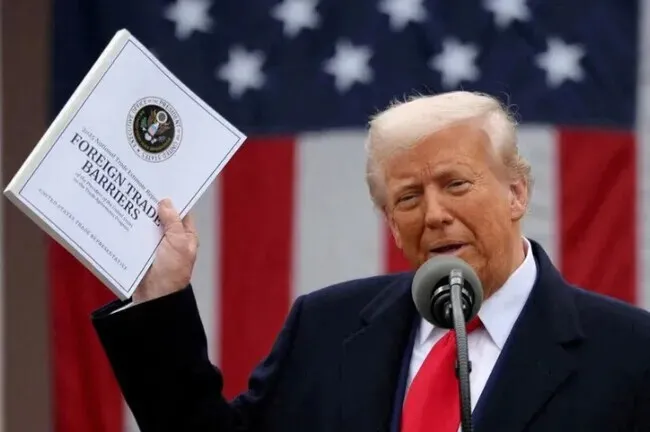
The US government is presenting the South Korean government with various demands in an effort to relieve the two sides’ trade imbalance, including calls for US energy purchases and looser regulations on beef imports.
The situation is expected to create difficulties for negotiations with the US as a new administration arrives after next week’s presidential election to continue tariff discussions.
In a briefing at the government complex in Sejong on Monday, a key South Korean trade official explained, “The US keeps insisting on ways of relieving South Korea-US trade imbalance issues in different product areas.”
They also said the US had “communicated demands in all six areas under discussion in working-level talks.”
Between May 20 and 22, a South Korean government delegation visited Washington, DC, to engage in a second round of working-level tariff discussions with the US. The focus of the discussions was on six areas insisted on by the US: balanced trade, non-tariff barriers to trade, economic security, digital trade, places of origin, and commercial considerations.
The remarks mean that during the three days of discussions, the US pressured South Korea to take steps to reduce the trade imbalance through every available means, including increased investment in the US and purchasing of US products; loosening of trade barriers, such as South Korean regulations on beef imports; and controls on exports of sensitive technology.
The same official also said the US demands “obviously reflect matters raised by stakeholders in the US and the trade barrier report drafted by the US government.”
“Our side had around 20 people taking part in the discussions, while the US had 50 or so people engaged in discussions in various areas, including representatives of the Office of the US Trade Representative, the Departments of Energy and Commerce, and US Customs and Border Protection,” they explained, suggesting the US was sending large numbers of people into the tariff negotiations to ramp up its onslaught.
But sources also said the discussions did not include mention of exchange rates, place of origin issues, or foreign government controls on pharmaceutical prices, which the US government has recently begun investigating. The government has also remained tight-lipped about demands for investment in an Alaskan energy development project — one of US President Donald Trump’s pet issues.
South Korean trade officials have communicated to Washington that exemptions should be granted on the reciprocal tariffs imposed by the US, along with tariffs on individual items such as automobiles and steel and other semiconductor and smartphone tariffs that have yet to materialize. Seoul has also stressed the need for special consideration of the fact that the existing South Korea-US Free Trade Agreement does not permit additional lowering of tariff rates.
The same key official explained, “We’re expecting that the schedule for the next technical discussions will be set based on consultation with the US once the new administration arrives.” This means that the next administration is likely to find itself presented with US demands as soon as it takes office.
Analysts are predicting a rough road ahead, as many of the US demands included in the trade barrier report concern areas that require the amendment of existing legislation.
By Park Jong-o, staff reporter
Please direct questions or comments to [english@hani.co.kr]

Editorial・opinion
![[Editorial] Head of USFK continues to cross the line with inappropriate political remarks](https://flexible.img.hani.co.kr/flexible/normal/500/300/imgdb/original/2026/0528/4817799568931091.jpg "[Editorial] Head of USFK continues to cross the line with inappropriate political remarks") [Editorial] Head of USFK continues to cross the line with inappropriate political remarks
[Editorial] Head of USFK continues to cross the line with inappropriate political remarks![[Editorial] A disgraced former president like Park Geun-hye has no place on the campaign trail](https://flexible.img.hani.co.kr/flexible/normal/500/300/imgdb/original/2026/0526/2117797859381587.jpg "[Editorial] A disgraced former president like Park Geun-hye has no place on the campaign trail") [Editorial] A disgraced former president like Park Geun-hye has no place on the campaign trail
[Editorial] A disgraced former president like Park Geun-hye has no place on the campaign trail- [Editorial] Korea’s online hate problem calls for platform regulation and anti-discrimination law
- [Reporter’s notebook] Trump’s primary purge of ‘traitors’ won’t win him anything
- [Guest essay] Moscow-Pyongyang ties are rewriting security in NE Asia
- [Reporter’s notebook] Trump’s primary purge of ‘traitors’ won’t win him anything
- [Column] An incompetent ally is worse than no ally at all
- [Editorial] Samsung’s tentative bonus deal highlights need for profit-sharing rules
- [Editorial] Crisis averted at Samsung, but society must continue chip profit-sharing debate
- [Editorial] Seoul and Tokyo should focus on pragmatic cooperation, not countering China
Most viewed articles
- 1K-pop wins big at AMAs, with BTS taking home artist of the year
- 2[Editorial] Head of USFK continues to cross the line with inappropriate political remarks
- 3KFTC eyes criminal proceedings against Coupang founder over alleged false filings
- 4[Editorial] Samsung’s tentative bonus deal highlights need for profit-sharing rules
- 5[Editorial] Crisis averted at Samsung, but society must continue chip profit-sharing debate
- 6[Reporter’s notebook] Trump’s primary purge of ‘traitors’ won’t win him anything
- 7Ambassador denies Iranian involvement after Korea concludes ship was hit by Iran-linked missiles
- 8Lee pulls off pragmatic diplomacy balancing act between strongmen Trump and Xi
- 9Seoul stops short of naming Iran as attacker in strike on ship in Hormuz
- 10[Guest essay] Moscow-Pyongyang ties are rewriting security in NE Asia