hankyoreh
Links to other country sites 다른 나라 사이트 링크
What havoc awaits us in the post-WTO ‘Trump Round’
 Add as preferred source on Google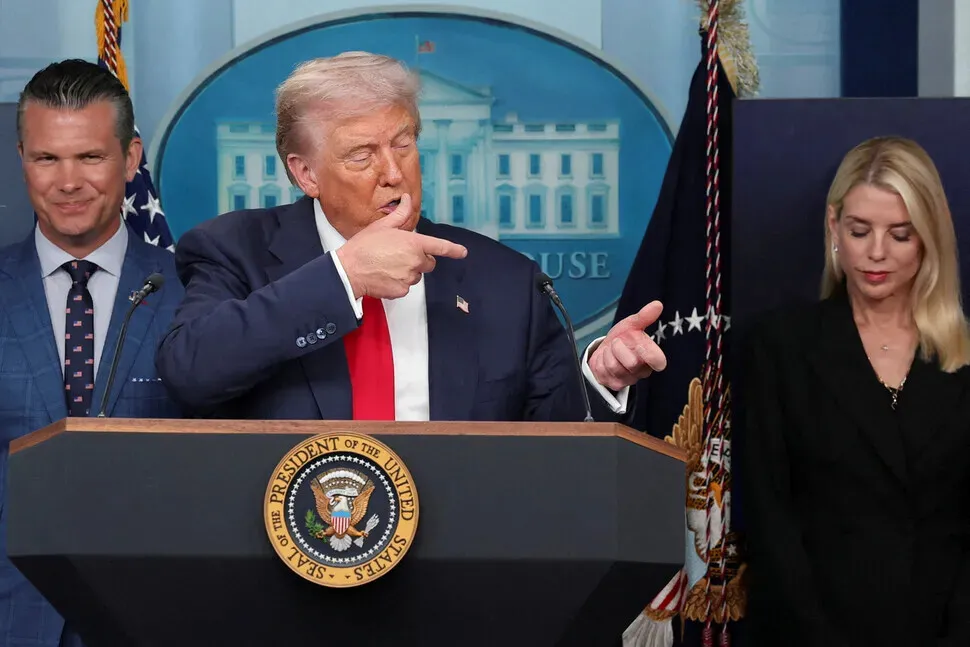
Donald Trump’s reelection as US president has set the world on fire. We’ve entered a time of radical change.
The Trump administration has declared that the World Trade Organization system — which has been in place for three decades now — is over. The new trade order being pushed by the US looks suspiciously like manufacturing protectionism driven by tariffs.
US Trade Representative Jamieson Greer has dubbed this strategy the “Trump Round.” But whatever it’s called, the US has obvious reasons for seeking a new trade order.
The Trump administration maintains that the biggest winner of the WTO system has been China, with its state-owned enterprises and five-year plans. The biggest loser, in contrast, is the US, which faces unsustainable losses of factory jobs and economic security.
Suppose the US gets its way. What would be the economic destinies of the US and China in a world without the WTO umbrella? And what would happen to other countries?
China’s economic destiny
Analyzing China’s massive economy is no easy task — there’s always the risk of missing the forest for the trees. That’s why we should be skeptical of anyone laying out simplistic scenarios about China’s collapse.
More people have been making dire predictions about China in recent years, but there’s little objectivity in such screeds. Indeed, many are laced with rage and bile about the economy that’s challenging American hegemony.
One notable Cassandra on China is Kyle Bass, founder of Hayman Capital Management and a fervent supporter of Trump.
When the US recently lifted a ban on US chipmaker Nvidia exporting its H20 chip to China, Bass was among the national security experts behind an open letter criticizing the move as a strategic error that imperils the US’ economic and military superiority in the AI sector.
Such behavior inevitably arouses suspicions that Bass’s pessimistic predictions are driven by fear and hatred of China. In other words, his predictions should not be regarded as the work of objective logic untainted by private emotions.
Still, the claims made by these pessimists cannot be totally ignored, as various signs pointing to a peak in China’s macroeconomic imbalances are becoming visible everywhere. Chinese President Xi Jinping recently noted that China’s flagship industries, including AI, electric vehicles and batteries, are experiencing overinvestment and overproduction. Criticizing the inefficient allocation of limited resources, Xi ordered a major supply reform, acknowledging that large-scale restructuring is inevitable.
While many expected China to surpass the US to become the world’s economic superpower, its recent trajectory is quite concerning. Deflation is a good indicator of a specific country’s financial health. China’s producer price index in June 2025 fell 3.6% year-on-year, marking 33 consecutive months of decline.
China’s GDP deflator has also been in the negative for eight consecutive quarters from the second quarter of 2023 to the first quarter of 2025, the longest period of such statistics since the relevant data became public in 1993.
How can we explain this situation? There are countless factors we can attribute this to. The most prominent, however, is the implosion of the real estate sector. Real estate accounts for 30% of China’s GDP. The Evergrande Group crisis, which triggered the collapse of China’s real estate market in the fall of 2021, sent shockwaves through global financial markets.
Four years later, the aftershocks of that crisis persist. Chinese real estate developers continue to default on debt and consumers remain hesitant to engage in property transactions. This has led to plummeting transaction volumes, causing housing prices in major cities to stay on a downward trend. The sharp drop in real estate prices also negatively impacts Chinese consumption. As the effect of wealth wanes, they become hesitant to open their wallets.
Deflationary pressures are mounting and the collateral value held by China’s financial system is declining. Real estate was once the biggest engine behind China’s success, but now, it has become its biggest obstacle.
The problem lies in the fact that the Chinese government seems to balk at the idea of taking measures to patch up its economy. Structural adjustments through enhanced transparency and capital discipline need to be carried out, but Beijing is delaying adjustments through state intervention rather than allowing a liquidating market. This situation repeats itself: overproduction is cyclical and the way it is being handled mirrors the method used in the real estate sector. Instead of letting the market resolve itself through its logic, the state is stepping in. In this situation, structural adjustments cannot be untainted.
The outward flow of capital is inevitable in these circumstances. Money is a fickle, brutal thing. If all hopes of profit grow thin and its safety cannot be guaranteed, money will attempt to make a hot exit. This is not a minor issue to be brushed off. Capital flight from a large economy like China will trigger a global capital realignment, and changes in US-China relations could have a serious impact on growth rates.
What will change in these turbulent times?
The value of a country’s currency is an indicator of the strength that state wields. As of 2025, the most dominant currency is the US dollar. The US dollar had been on the rise since May 2021 and continued that streak until the beginning of October 2022. This period is perfectly in sync with the rise in the US Fed interest rate. The US dollar has been on the decline since that period, but still remains in the 100s, according to the US Dollar Index — certainly, it cannot be said to be weakening.
Trump very much wishes for that to be the case, but the US dollar is defying expectations by continuing its rise. This can be attributed to the US’ relatively high interest rates compared to those of its neighbors. The European Central Bank recently made the bold choice of making eight consecutive interest rate cuts. In contrast, the US Federal Reserve System has frozen interest rates after making conservative cuts. As a result, US Treasury bond yields are higher than those of other major countries. Global funds are concentrating on buying US dollars to obtain US government bonds, which is why the dollar is bullish.
Some say that issuing astronomical amounts of Treasury bonds will plunge the market into chaos and drive the US to ruin. However, reality is heading in the opposite direction. Investors do not divide capital solely based on possible growth and surpluses. The preservation of funds is also a key factor to consider.
If the US dives into chaos, other countries will face even more dire consequences. If the US so much as coughs, a plague will spread to other countries. It pains us to admit this, but those are the facts. If all of us are in a precarious situation, or if the US finds itself in a slightly safer environment, it is only natural for other countries to direct their funds to the US. Even if the increase in demand for government bonds increases, leading to a dip in the rate of return, US government funds are the safest way to preserve capital. It would be foolish to believe that this trend will fundamentally change overnight.
Another factor can explain the strength of the US dollar. Global funds are being directed to the US. Trump is hiding behind tariffs to sweep overseas capital into the US’ pockets. The major change he has triggered also ramps up anxiety. The US dollar grows stronger whenever the world experiences serious crises. The noise from China’s economy could further deepen dependence on the dollar.
China is not equipped with a consumer market capable of replacing the US market. As long as the yuan fails to provide sufficient purchasing power to the world, it will remain inferior to the dollar. The more rifts emerge and worsen within the Chinese economy, the more investors will choose safety and preservation over yield. This is why the US dollar and Treasury bonds still serve as the world’s top safe-haven assets, despite the US’ severe fiscal imbalances and high debt levels, attested by the dollar’s strength.
Of course, the US won’t be totally immune and thriving in this period of global upheaval. Over the past two decades, the US has reaped enormous benefits from China’s rise. It was able to export inflation and import deflation. China has been a major market for US exports of high-tech industries and luxury consumer goods and a supply chain partner for US companies.
If this momentum weakens, the performance of US companies will undoubtedly feel the pressure. A weakening Chinese economy equates to reduced purchasing power. World trade will decrease and the demand for US goods and services will also drop. Investment flows, or capital flows, could also slow.
The US shoots itself in the foot
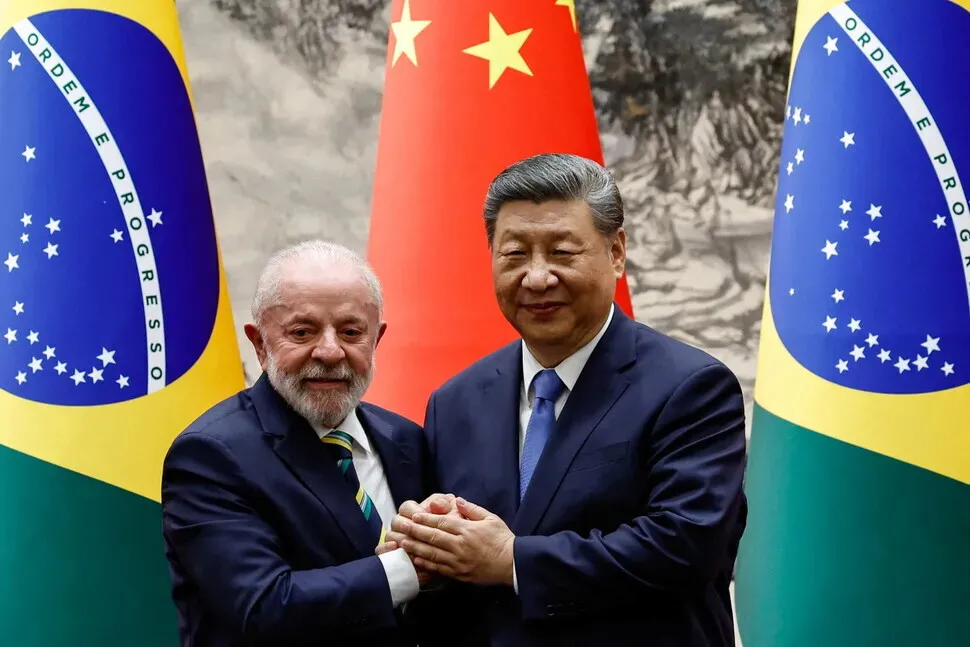
The US’ purchasing power will inevitably lose steam in the long run. High tariffs will isolate the US, in the relative sense, not an absolute one. This is best exemplified by how India and Brazil, both members of BRICS, are bolstering their friendship.
Domestic consumption in the US will weaken as tariffs force households to experience budget strains. Waves of undocumented immigrants have been evicted after the US strengthened its immigration policy, leading to dwindling supplies in the labor market. No matter how much the AI revolution attempts to haul the US’ GDP upwards, the country will see its growth grow sluggish.
In time, the US will shoot itself in its foot. Even its own allies are growing wary of the country, as the US builds walls that exclude them. The aggression it adopts when confronting trade partners has led to backlash, prompting such countries to find partners to replace the US. The less that countries rely on it, the greater the toll on America’s power.
Many countries may believe China to be a more trustworthy economic partner in the far future. Such developments will entail much-needed reform within the Chinese government, as it will need a system that the international community finds credible and trustworthy.
That being said, the country most severely affected at this current moment is China, and it will be forced to weather these circumstances for quite a while. Faced with this environment, investors will focus on methods that enable them to protect their capital instead of proliferating it. Right now, the US seems like the only option.
Deep-seated fiscal deficit and political turmoil aside, capital relies heavily on the US. Capital is unbothered by ideology and instead prioritizes flexibility and trust. The outward flow of capital, whatever form it takes, will exacerbate the difficulties felt by the state.
Even the American media describes Trump’s high tariffs as acts of pilfering and blackmail. The US is manhandling the world order with the hefty purchasing power of its consumer market as its trusty weapon.
Sudden shifts lead to conflict and confusion. Whether the world likes it or not, it needs to accommodate itself to that dramatic change. States that quickly adjust to the new situation will grow, while those that fail to do so will lag. The phrase “the survival of the fittest” has never rung truer.
By Yoon Seok-cheon, economics commentator
Please direct questions or comments to [english@hani.co.kr]

Editorial・opinion
![[Column] The unspoken deal that made China a nation led by engineers](https://flexible.img.hani.co.kr/flexible/normal/500/300/imgdb/original/2026/0821/381787301627593.jpg "[Column] The unspoken deal that made China a nation led by engineers") [Column] The unspoken deal that made China a nation led by engineers
[Column] The unspoken deal that made China a nation led by engineers![[Column] Does the US deserve allies’ trust?](https://flexible.img.hani.co.kr/flexible/normal/500/300/imgdb/original/2026/0818/8417870405925049.jpg "[Column] Does the US deserve allies’ trust?") [Column] Does the US deserve allies’ trust?
[Column] Does the US deserve allies’ trust?- [Column] No, tactical nukes aren’t practical for real-world use
- [Column] ‘The Odyssey’: Finally, a good chamber drama
- [Column] How will the US uphold deterrence when it runs out of weapons?
- [Column] US isn’t pulling out of the Middle East — it’s being kicked out
- [Editorial] Will shift in US nuclear strategy reintroduce tactical nukes to Korea, Japan?
- Why does the USFK commander keep butting heads with Seoul?
- [Guest essay] Futures thinking in science fiction
- [Editorial] New US envoy must stick to her diplomatic mission
Most viewed articles
- 1[Reportage] US looks to Korean experience to ease its critical mineral reliance on China
- 2Last time they met, Kim Jong-un needed Trump. Have the tables turned?
- 3[Exclusive] SK Hynix to build memory fab in Japan’s Miyagi
- 4[Column] The unspoken deal that made China a nation led by engineers
- 5The bill for America’s superpower status is coming due
- 6[News analysis] Is Trump about to undo US policy on North Korea’s denuclearization?
- 7[News analysis] Truncated military drills: Bad for OPCON transfer, good for peace?
- 8Former bodyguard’s dark tale of marriage to Samsung royalty
- 9[Column] ‘The Odyssey’: Finally, a good chamber drama
- 10Pyongyang has ‘no interest’ in Trump’s cut to SK-US military drills, says Kim Yo-jong