hankyoreh
Links to other country sites 다른 나라 사이트 링크
US call for backup in Strait of Hormuz could put allies like Korea in ‘kill box’
 Add as preferred source on Google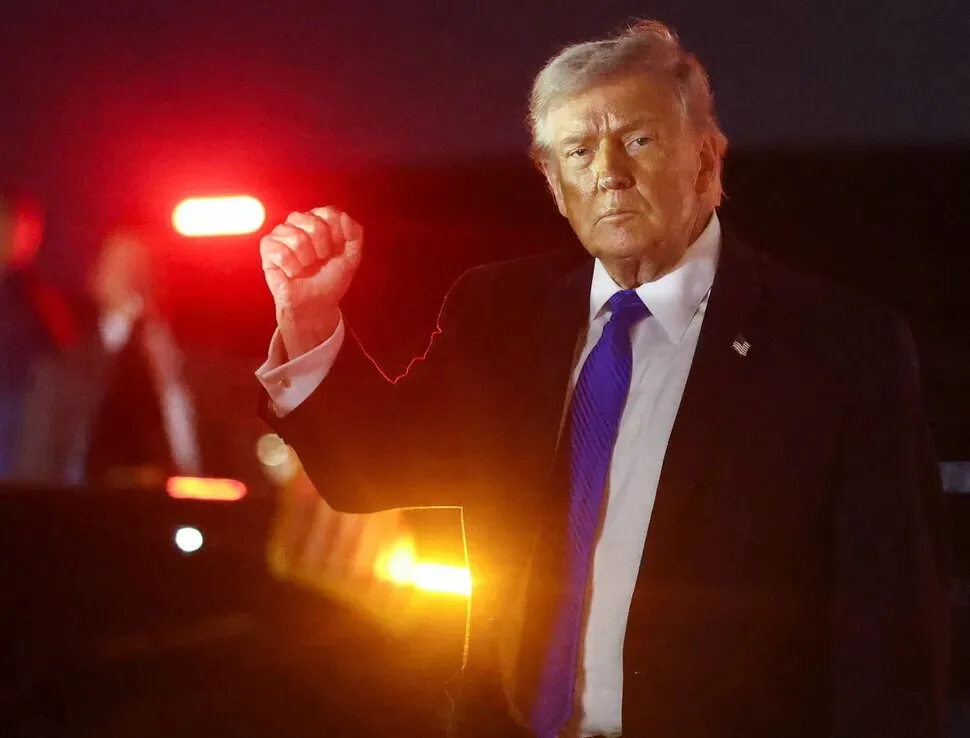
After US President Donald Trump called on major importers of crude oil, including South Korea, to step up and aid the defense of vessels in the Strait of Hormuz, some observers have suggested that this demand reflects a strategic calculation to spread Iran’s asymmetric threats in the strait across other countries, rather than have US forces bear it alone. Some have also described the demand as a form of “transactional security” characteristic of Trump, who approaches relations through a hard calculus of costs and benefits.
In addition to allies like Korea, Japan, France and the UK, Trump also mentioned China in his social media post demanding countries to send warships, as Beijing is similarly “affected by this artificial constraint” created by the Iranian threat. The argument is that countries that stand to profit the most from the strait being open for business should play their part and share in the costs.
“In the meantime, the United States will be bombing the hell out of the shoreline, and continually shooting Iranian Boats and Ships out of the water,” Trump announced in the same post, indicating that the US’ role will be to conduct strikes from a distance.
In another post, Trump explicitly called on allies to take more responsibility, saying, “The Countries of the World that receive Oil through the Hormuz Strait must take care of that passage, and we will help — A LOT!”
Trump’s plan appears to be to have countries that rely on Middle Eastern oil send ships into the dangerous strait in an operation to guard oil tankers and commercial vessels while the US conducts air strikes.
Experts say that any military operation to escort vessels through the strait would be exceptionally dangerous.
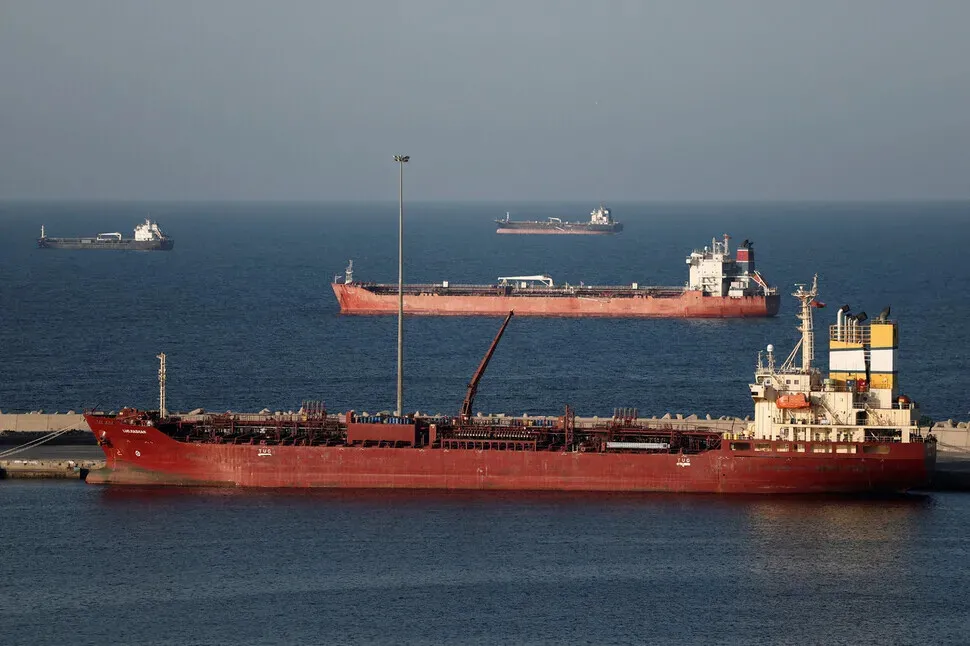
The Wall Street Journal reported on Thursday that the US is “holding off on” sending forces into the strait, which at its narrowest point is only 21 miles (around 34 km) wide. The journal quoted naval officers as saying that Iranian drones and missiles could turn the chokepoint into a “kill box.”
The Strait of Hormuz is curved and narrow, like a horseshoe, rendering a vessel susceptible to threats from a 270-degree angle. This means that Iran’s Islamic Revolutionary Guard Corps could attack vessels passing through the narrow corridor with drones, anti-ship missiles, or high-speed boats from virtually all directions.
In his Truth Social post on Satruday, Trump declared, “We have already destroyed 100% of Iran’s Military capability, but it’s easy for them to send a drone or two, drop a mine, or deliver a close range missile somewhere along, or in, this Waterway, no matter how badly defeated they are,” acknowledging the remaining asymmetric threats Iran can still levy.
The US has lost 13 service members in its war with Iran so far, and therefore seems to be trying to spread the exposure to the military and political risks of entering the so-called kill box.
Even if South Korea and other oil importers were to send warships to escort oil tankers and commercial vessels, there’s no guarantee that it would mean a return to friction-free logistics in the channel.
The Wall Street Journal cited experts who estimated that it would require two warships and drone surveillance to escort one oil tanker, suggesting the immense scale of such an operation.
If such an operation were undertaken, the newspaper reported, it could accommodate only about 10% of strait traffic under normal conditions. Considering that over 600 ships are blocked from passage right now, it could take months to get all of them through.
A more aggressive option would be to deploy ground troops to directly attack Iran’s southern shores along the strait. The WSJ reported that the option of deploying Marines to secure the shoreline and take out missile and drone launchers is being considered.
The New York Times reported on Friday that 2,500 US Marines aboard as many as three warships are deploying to the Middle East from the Indo-Pacific region, joining the nearly 50,000 US troops already stationed in the region.
US Central Command, which oversees operations in the Middle East, has reportedly requested additional troops to the region to expand operational options regarding Iran. This indicates that the conflict could stretch into the long term. The Islamic Revolutionary Guard Corps could resort to guerrilla tactics to increase US casualties, so a ground deployment is not a card that can be drawn in haste.
It’s notable that Trump mentioned China first in his list of countries that should send ships to the region. As a nation that is economically and diplomatically allied with Iran, China is Iran’s primary buyer of oil and the US’ primary strategic rival.
Some analysts say the remark is a pressure tactic aimed at increasing US leverage over China ahead of the US-China summit scheduled for the end of this month.
By Kim Won-chul, Washington correspondent
Please direct questions or comments to [english@hani.co.kr]

Editorial・opinion
![[Column] US isn’t pulling out of the Middle East — it’s being kicked out](https://flexible.img.hani.co.kr/flexible/normal/500/300/imgdb/original/2026/0812/4317865219661676.jpg "[Column] US isn’t pulling out of the Middle East — it’s being kicked out") [Column] US isn’t pulling out of the Middle East — it’s being kicked out
[Column] US isn’t pulling out of the Middle East — it’s being kicked out![[Editorial] Will shift in US nuclear strategy reintroduce tactical nukes to Korea, Japan?](https://flexible.img.hani.co.kr/flexible/normal/500/300/imgdb/original/2026/0807/6217860897464353.jpg "[Editorial] Will shift in US nuclear strategy reintroduce tactical nukes to Korea, Japan?") [Editorial] Will shift in US nuclear strategy reintroduce tactical nukes to Korea, Japan?
[Editorial] Will shift in US nuclear strategy reintroduce tactical nukes to Korea, Japan?- [Guest essay] Futures thinking in science fiction
- [Editorial] New US envoy must stick to her diplomatic mission
- [Editorial] Drone incident should serve as a wake-up call for US-Korea communication
- [Column] Lessons from the tragedy of the Donghak rebellion for regaining OPCON
- [Column] Can Korea advocate peace while selling weapons of war?
- [Column] The 40-year-old agreement haunting Korea’s booming semiconductor sector
- [Column] In an era of waning US hegemony, NE Asia needs the status quo
- [Editorial] The alarming prospect of more North Korean troops for Russia
Most viewed articles
- 1US defense policy chief calls notion of US-less middle power alliance a ‘delusion’
- 2Pro-Yoon pastor claims he was jailed for criticizing Lee administration — here’s the truth
- 3Coupang CEO Rogers files for sale of nearly $3.11M in company stock
- 4[Column] US isn’t pulling out of the Middle East — it’s being kicked out
- 5Zelenskyy says Russia used North Korean missiles in deadly strike on Zaporizhzhia
- 6[Editorial] Will shift in US nuclear strategy reintroduce tactical nukes to Korea, Japan?
- 7Another migrant worker dies in Korea’s heat wave. How many more deaths go uncounted?
- 8Real-life heroes of “A Taxi Driver” pass away without having reunited
- 9[Reportage] Francesca Hong, the Korean American democratic socialist winning over Wisconsinites, left and right
- 10[Guest essay] Futures thinking in science fiction