hankyoreh
Links to other country sites 다른 나라 사이트 링크
[Korean news in review] In a historic year, martial law shock overshadows all else
“Beyond your wildest imagination.” It’s hard to think of a better description of 2024 in Korea than this promotional tagline from a movie that came out 20 years ago.
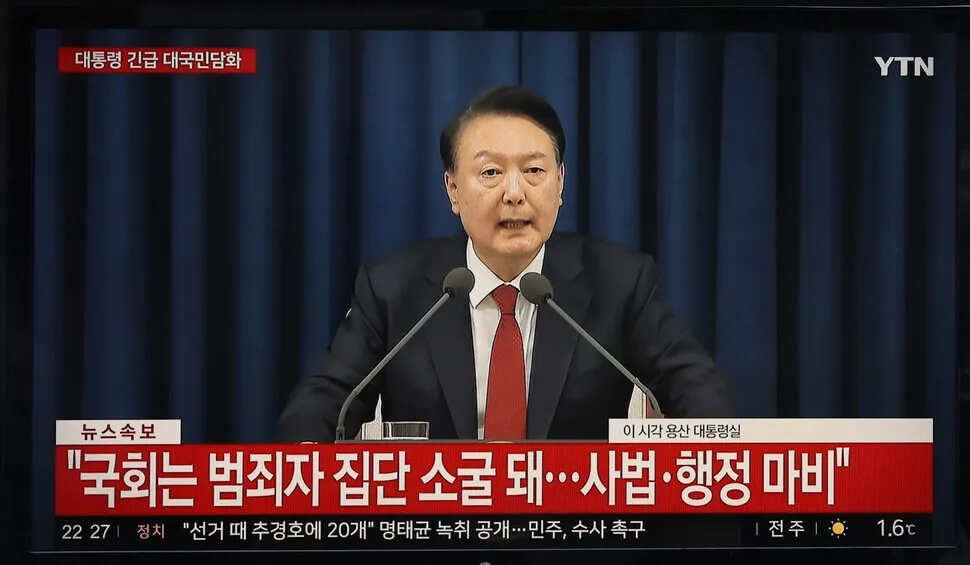
Koreans were overjoyed by the unexpected announcement that Han Kang had won the Nobel Prize in literature, representing a monumental achievement for Korean literature as a whole. But soon, they had to confront the nightmare declaration of martial law, the first in 45 years.
But crises can be opportunities in disguise. Here’s hoping that 2025 will be a year for Koreans to sweep away a leader lost in a fog of delusion and superstition, demonstrating the resilience of “K-democracy,” and to prepare for future challenges, including the climate crisis and the demographic cliff.
Insurrection meltdown: Korea’s first martial law declaration in 45 years
At 10:28 pm on Dec. 3, the clock in Korean society was wound back 45 years. The reckless act by President Yoon Suk-yeol — who has fallen for far-right conspiracy theories and paints his political opponents and critics as “anti-state forces” — nearly wrecked everything Koreans have worked so hard to accomplish. Those six hours until martial law was officially lifted early on Dec. 4 were a time of astonishment, shock and anger.
The martial law declaration was unconstitutional and illegal, failing to meet the necessary conditions or follow the requisite procedures, and the martial law decree that followed was marked with frightening phrases. Both documents exhibited a naked hostility for the National Assembly, the press, labor and junior doctors.
The heads of the Special Warfare Command and the Capital Defense Command, who commanded the special forces deployed in the operation to seize the National Assembly and the National Election Commission, have testified that they received multiple orders to “drag out the lawmakers” and to “seize National Election Commission servers” from Yoon and former Defense Minister Kim Yong-hyun.
The Korean citizens who risked their personal safety to stop martial law declared that a man determined to wreck the constitutional order and trample on democracy was no longer fit to be president. Just 11 days after the martial law declaration, the National Assembly passed a bill of impeachment against Yoon, suspending the presidential authority of the ringleader of the insurrection.
But that insurrection is still underway, as evidenced by the troubling testimony that is being unearthed by investigators. A former general who was dishonorably discharged for sexual misconduct and went on to become a fortune teller apparently conspired with current officers to plan martial law and an operation aimed at agitating North Korea to commit a military provocation.
Yoon refuses to cooperate with the investigation into insurrection charges or with the Constitutional Court’s review of his impeachment, and the ruling party, far from offering an apology or showing any remorse, continues to block the appointment of judges to the Constitutional Court or the appointment of a special counsel to lead the insurrection probe. Acting President Han Duck-soo has followed suit, stonewalling the minimum steps needed to restore democracy.
In short, the fight to preserve our democracy and return to normal isn’t over yet.
By Lee Seung-jun, staff reporter
Han Kang: Asia’s first woman to receive the Nobel Prize in literature
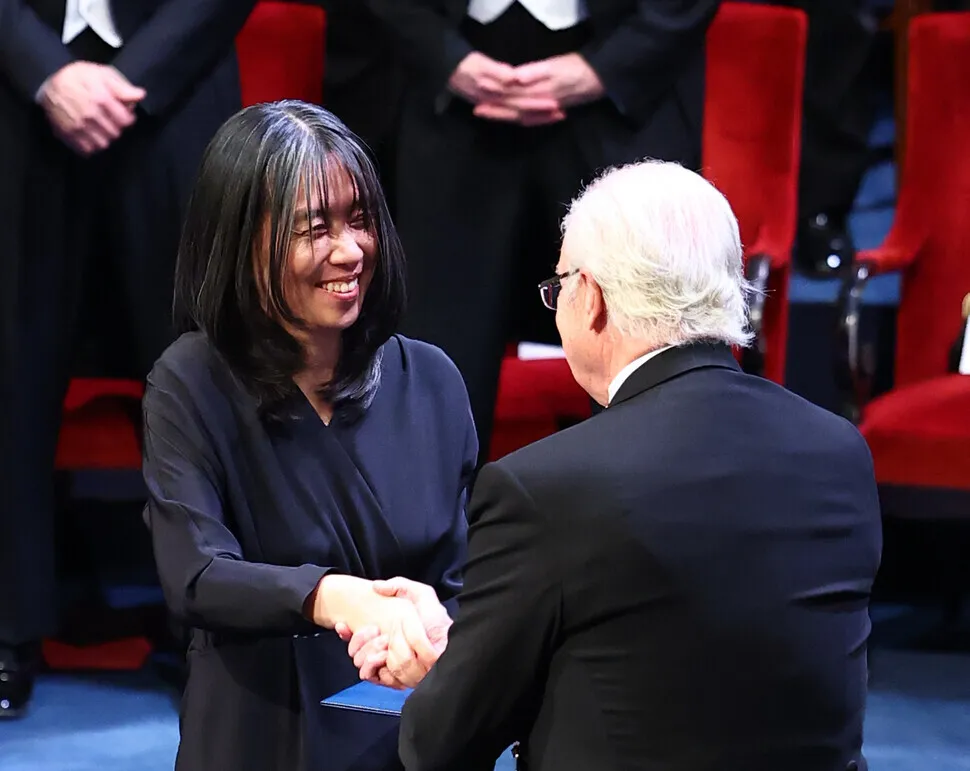
Korean literature experienced a watershed moment at 8 pm on Oct. 10, 2024. That was the time in Korea when the world learned that writer Han Kang, aged 54, had been given this year’s Nobel Prize in literature. Han is the first writer born in the 1970s, as well as the first Asian woman, to receive that honor.
The Swedish Academy, the body that selects winners of the Nobel Prize in literature, praised Han “for her intense poetic prose that confronts historical traumas and exposes the fragility of human life.”
The publishing market in the fourth quarter of the year was dominated by Han’s books, including “Human Acts,” set during the Gwangju Uprising in 1980; “We Do Not Part,” which deals with the Jeju April 3 Incident; “The Vegetarian,” which confronts human frailty and ultraviolence; and “I Put the Evening in the Drawer,” a volume of poetry that will be published in Western markets for the first time next year.
While Han’s Nobel came as a complete surprise, Korean literature had been rising in prominence in recent years. Kim Hye-soon became the first Korean to win the National Book Critics Circle Award for Poetry this March. Furthermore, Korean authors have made the shortlist of the International Booker Prize for three years in a row (and five times altogether).
Han Kang spoke about the “huge shock” of Yoon’s abortive martial law declaration and said that literature “stands in opposition to all acts that destroy life.”
By Im In-tack, staff reporter
Medical chaos caused by 2,000 new slots at medical schools
This past February, the Korean government announced a plan to increase admissions at the country’s medical schools by 2,000, from 3,058 to 5,058, in a bid to resolve the shortage of doctors. That was a mind-boggling jump, far behind anybody’s expectations.
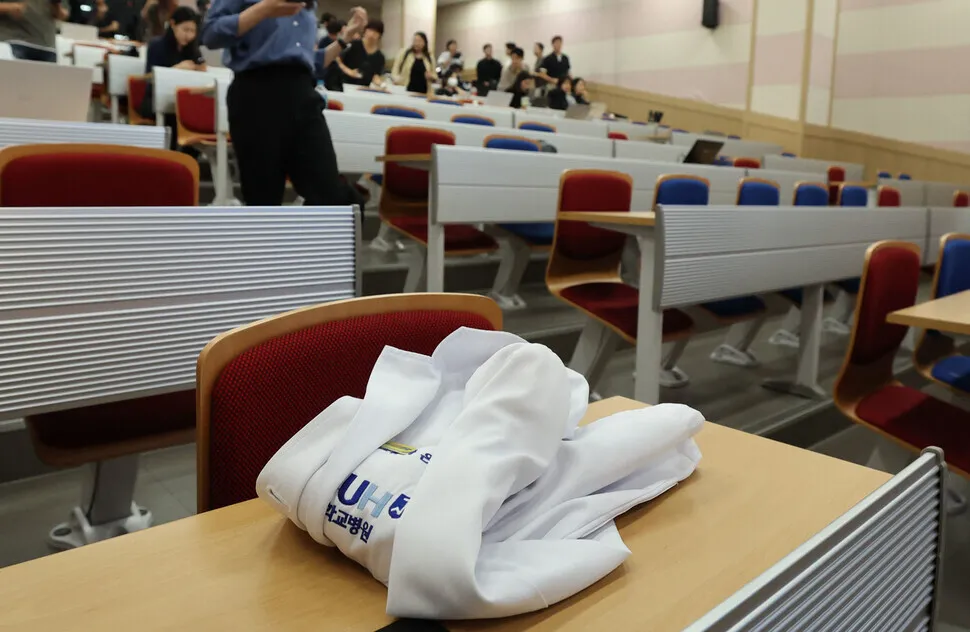
Doctors denounced what they described as a slapdash plan, and around 10,000 junior doctors (interns and residents) resigned en masse. Medical students have also gone on hiatus in solidarity.
The government responded with harsh measures, such as ordering the trainee doctors back to work, intensifying its conflict with the medical establishment. Large hospitals that depend on junior doctors for their operations face a shortage of medical professionals that makes it hard for patients to receive the care they need.
The junior doctors have not returned to work, demanding that the government scrap its medical reforms. But the government isn’t backing down. Medical schools are currently recruiting students, though they have reduced the new placements from 2,000 to 1,509.
With so many doctors submitting their resignations and students taking leave from their studies, applications for the Korean Medical Licensing Examination and for medical internships and residencies have plunged to 10% of last year’s levels. But at the close of the year, there are still no signs of a breakthrough in the government’s dispute with the medical community.
By Lee Kyung-mi, staff reporter
The Pandora’s box of Myung Tae-kyun
This past September, the first reports were coming out regarding first lady Kim Keon-hee’s alleged interference in the ruling party’s official nominations ahead of the April 10 general election.
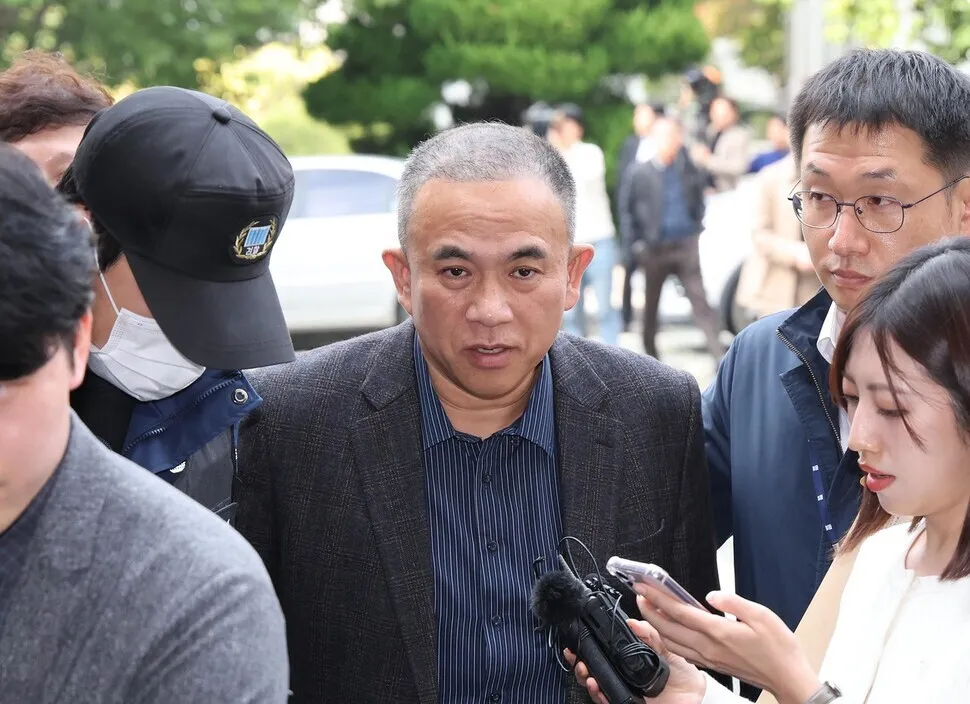
Follow-up reports indicated that a political broker based in the South Gyeongsang region named Myung Tae-kyun had conducted personalized polling services for President Yoon Suk-yeol and Kim since the presidential election; had developed a deep relationship with the president and the first lady; and had been promised that former lawmaker Kim Young-sun (People Power Party) would be given a nomination in the June 2022 by-election. This promise was allegedly provided instead of the normal payment for Myung’s polling services.
Later, the scandal snowballed when allegations arose that Myung exploited his friendship with Yoon and Kim to conduct various instances of election interference; manipulate polls, lobby for the nominations and employment of his acquaintances in exchange for money and valuables; and interfere in the selection process for a major development project in Changwon.
Various prominent politicians were linked to the alleged influence-peddling in reports that followed, including Seoul Mayor Oh Se-hoon, Daegu Mayor Hong Joon-pyo, Busan Mayor Park Heong-joon, South Gyeongsang Governor Park Wan-su, Gangwon Governor Kim Jin-tae, and lawmakers Lee Jun-seok, Yoon Sang-hyun, Cho Eun-hee, Yoon Han-hong, Kweon Seong-dong and Kim Chong-in.
The Changwon District Prosecutors’ Office had been slow-walking its commission by the South Gyeongsang branch of the National Election Commission to investigate Kim Young-sun and Myung in December of last year. But the Changwon prosecutors finally began investigative procedures and indicted and detained Myung on Dec. 3 on charges of violating political funding laws.
By Choi Sang-won, South Gyeongsang correspondent
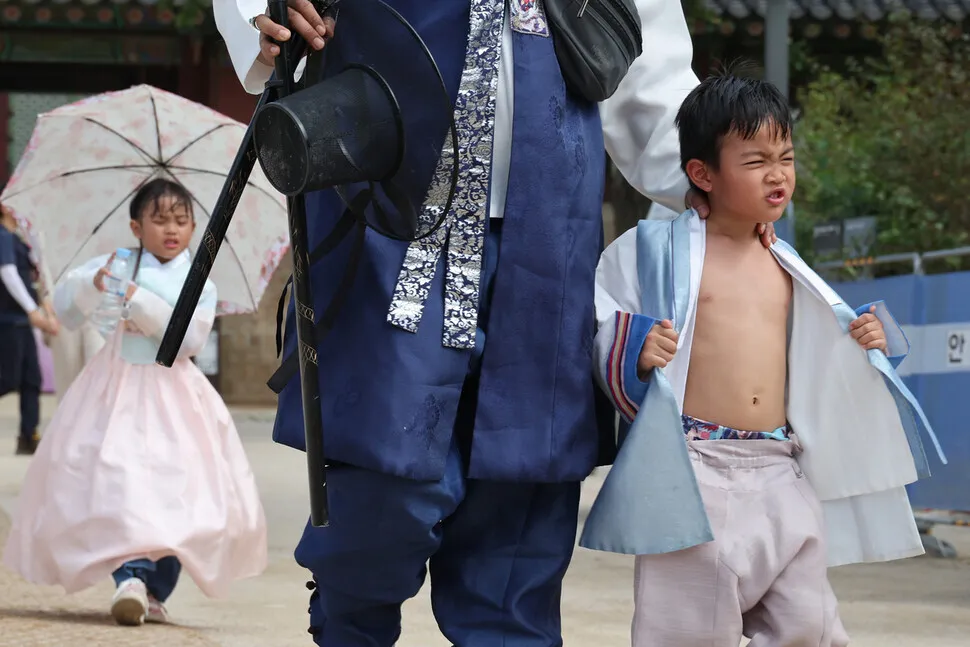
Still turning on the AC during Chuseok, autumn heat wave
This year was comparable to 1994 and 2018, when South Korea saw its historically worst heat waves. The autumn heat wave of this past September was the first of its kind. Temperatures throughout the Chuseok holiday (Sept. 16-18) were eight to nine degrees higher than normal, and 21 regions nationwide recorded all-time highs on Chuseok day. Instead of making traditional songpyeon rice cakes, people headed to outdoor swimming pools.
Following the Chuseok holiday, Seoul issued a heat wave advisory, the latest one to date. This was the first time such an advisory had been issued in September since 2010, 14 years prior, and the first time since 2020, when the standard for issuing a special alert was adjusted to the perceived temperature rather than the actual temperature.
EU climate monitors predicted that this year would go down as the “hottest year in history,” with the average temperature rising 1.6 degrees above levels recorded before global industrialization. On Aug. 29, the Constitutional Court ruled that the country’s objective of reducing greenhouses only until 2030 constituted a violation of the basic rights of future generations, and was therefore unconstitutional. It was Asia’s first “climate lawsuit” verdict.
By Park Ki-yong, staff reporter
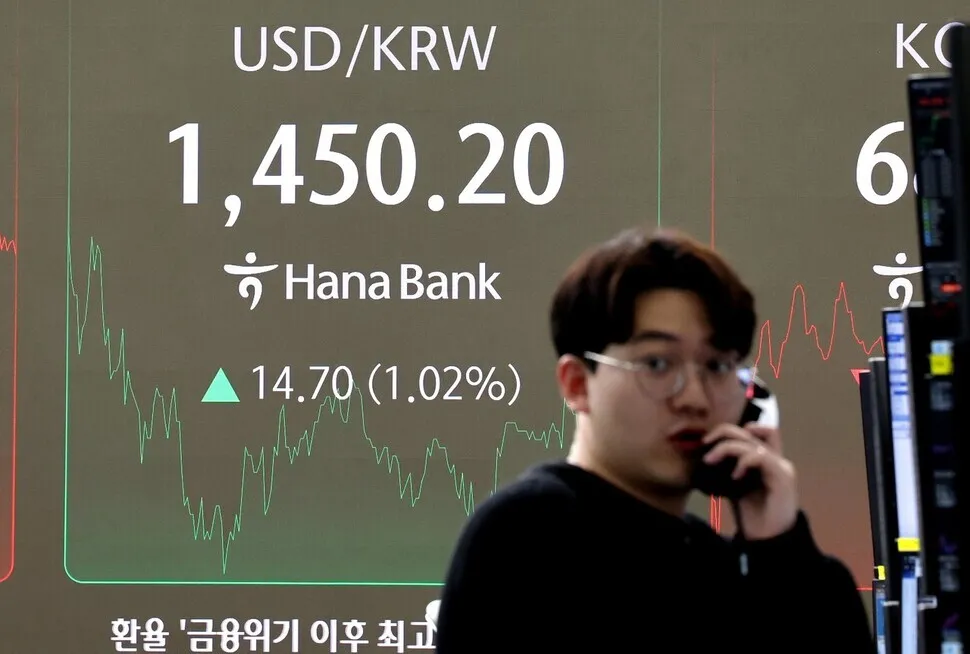
Forex anxiety on top of inflation, won-dollar rate rises to 1,450 won
Inflation and rising prices for consumer goods had working-class Koreans tightening their belts starting from the beginning of this year. During the first half of the year, inflation exceeded 3%. From February to April, prices for vegetables and fresh foods rose at a rate of around 20%. Seemingly unaware of this reality, President Yoon Suk-yeol remarked, “875 won for a bundle of green onions is quite reasonable,” revealing his ignorance of the common person’s economic realities. This blunder was one of the factors that contributed to the ruling party’s losses in the April general election. Fortunately, prices began to stabilize during the second half of the year.
However, anxiety around the won-dollar exchange rate took the place of inflation woes. Ceaseless stock dumps by foreign investors contributed to the rising exchange rate. Donald Trump amped up his protectionist rhetoric by hinting at the potential for universal tariffs while on the campaign trail. Following his electoral victory, the Korean won continued to falter in value. The political turmoil in the aftermath of the declaration of martial law on Dec. 3 hit the won where it hurts. As concerns about political uncertainty contributing to economic risks grew, the won-dollar exchange rate shot up to 1,450. This was the same exchange rate right after the global financial crisis of 2009.
By Kim Kyung-rak, staff reporter
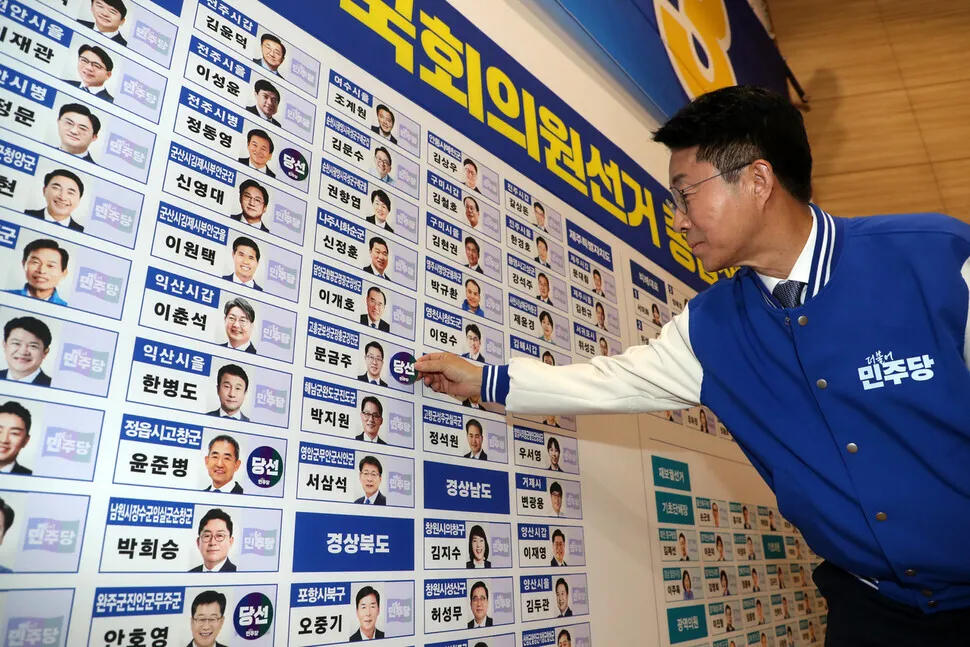
Democratic Party secures 175 seats in general election, reflective of public ire toward administration
Public sentiment had soured on Yoon and his party, and was borne out in the April 10 general election, when opposition parties won 192 seats, while the ruling party captured only 108.
This marked a record defeat for the People Power Party, the likes of which had never been suffered by a ruling party during the Republic of Korea’s constitutional history. Despite considerable public controversy over its internal nomination processes, the Democratic Party, the largest opposition party, secured 175 seats in the National Assembly, and set out to punish the ruling party.
The PPP defeat was the cumulative result of first lady Kim Keon-hee’s luxury handbag scandal; alleged state interference in a military investigation of the death of a Marine, and the former defense minister Lee Jong-sup, evading investigation by becoming the ambassador to Australia; and President Yoon Suk-yeol’s careless comment the “reasonable” costs of groceries.
Democratic Party leader Lee Jae-myung, whose political career had been endangered by two years of investigations by Yoon’s friends in the prosecution service secured an overwhelming victory in the general election, establishing his position within the party and setting him up to become the party’s next presidential candidate.
The ruling party’s rout came just two years into the Yoon administration. It was an early indicator that public rage concerning the Yoon administration had reached a tipping point. Yet Yoon and the ruling party continued to ignore the warning signs until the last moment. Yoon, who had vowed to “humbly accept the people’s wishes expressed during the general election and reform national governance,” chose martial law instead of reform.
By Um Ji-won, staff reporter
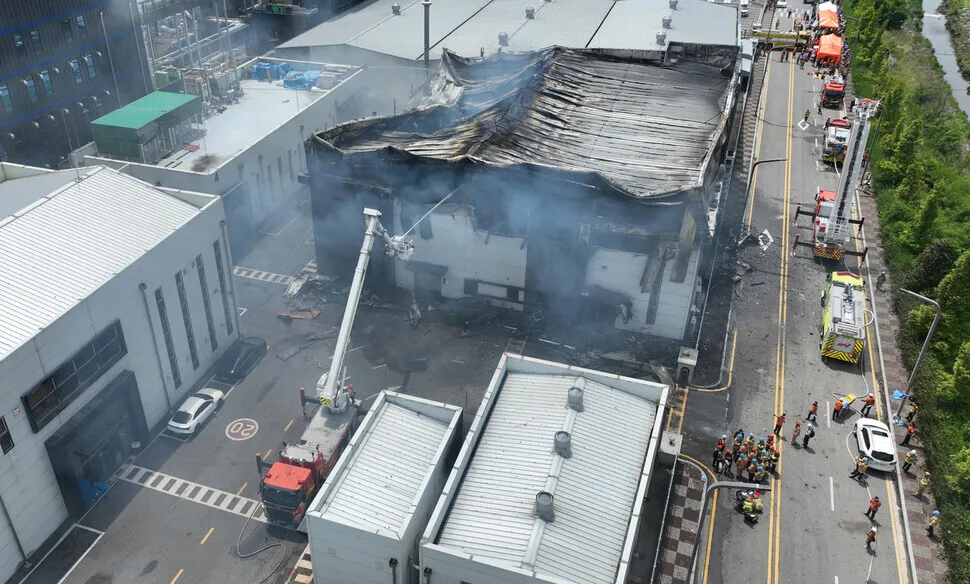
Migrant workers die in Aricell battery factory in Hwaseong
On June 24, 18 migrant workers died during a fire at a lithium battery factory operated by Aricell in Hwaseong. A total of 23 people died during the fire. Aricell CEO Park Soon-kwan is currently on trial on charges of violating industrial safety regulations (Serious Accidents Punishment Act). His son, Park Joong-eon, head of Aricell’s factory management, and other company executives are on trial for professional negligence.
Surviving family members concluded funeral proceedings on Nov. 3, a full 132 days after the incident, but consultations on compensation between the company and family members are reportedly on hold.
The Aricell tragedy revealed issues pertaining to the practice of “outsourcing danger” involving illegally dispatching migrant workers employed under sham subcontracts, and the system that shifts risk and danger to migrant workers.
Investigations into the accident revealed that it was caused by simple negligence regarding on-site safety protocols, making it a man-made disaster. A large number of migrant workers dispatched by an unlicensed broker were sent into the factory without proper safety training or the adequate skills necessary for battery production. The investigation also revealed that the company had manipulated data in its quality control tests for batteries commissioned by the Ministry of National Defense.
By Lee Jung-ha, Incheon correspondent
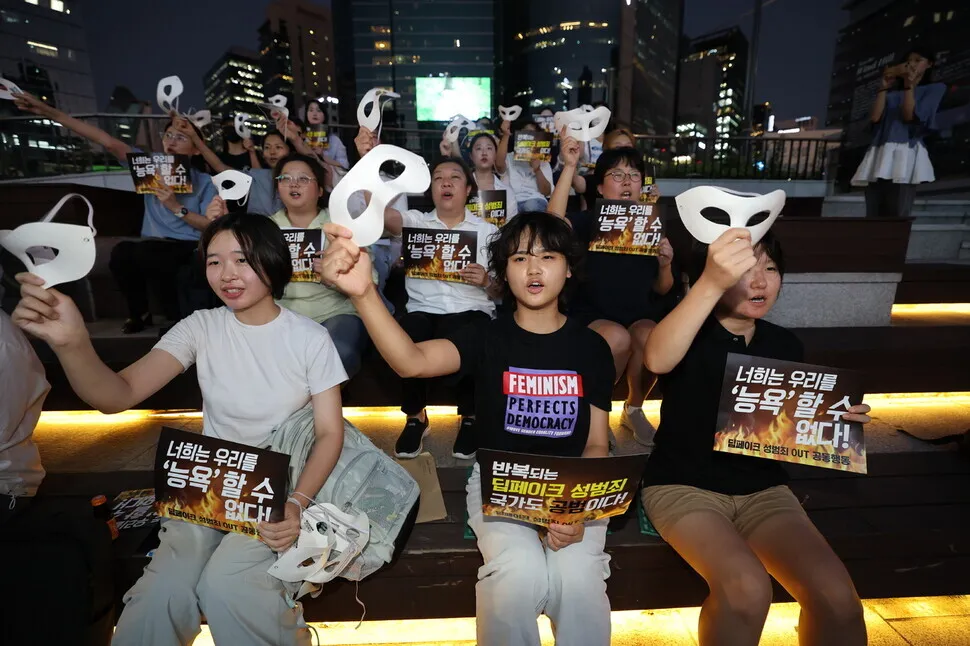
Deepfake crimes proliferate among elementary, middle and high school students
Sex crimes involving deepfake technology that employs sophisticated algorithms to produce fake images and audio emerged as a societal issue in late August. The perpetrators would steal images of the female victims and graft them onto nude images of other people to synthesize illegal sexual exploitation materials that they would then distribute along with the victims’ personal information.
The shocking reality that such crimes were rampant among students in elementary, middle and high school spurred the National Assembly and the government to act. A law that punishes the unauthorized possession, purchase, storage, viewing, distribution and production of such content went into effect on Oct. 16.
Lawmakers also decided to hold overseas platforms like Telegram increasingly responsible for preventing the distribution of illicit sexual content. As demonstrated by the cases of illegal photography in 2018, the Telegram “Nth Room” incident of 2019, which involved the sexual exploitation of children and minors, and the recent proliferation of illegal deepfakes, authorities repeatedly act only in the aftermath of immense harm. Comprehensive countermeasures against the constantly evolving forms of technologically aided gender violence are still a riddle to be solved.
By Kim Hyo-sil, staff reporter
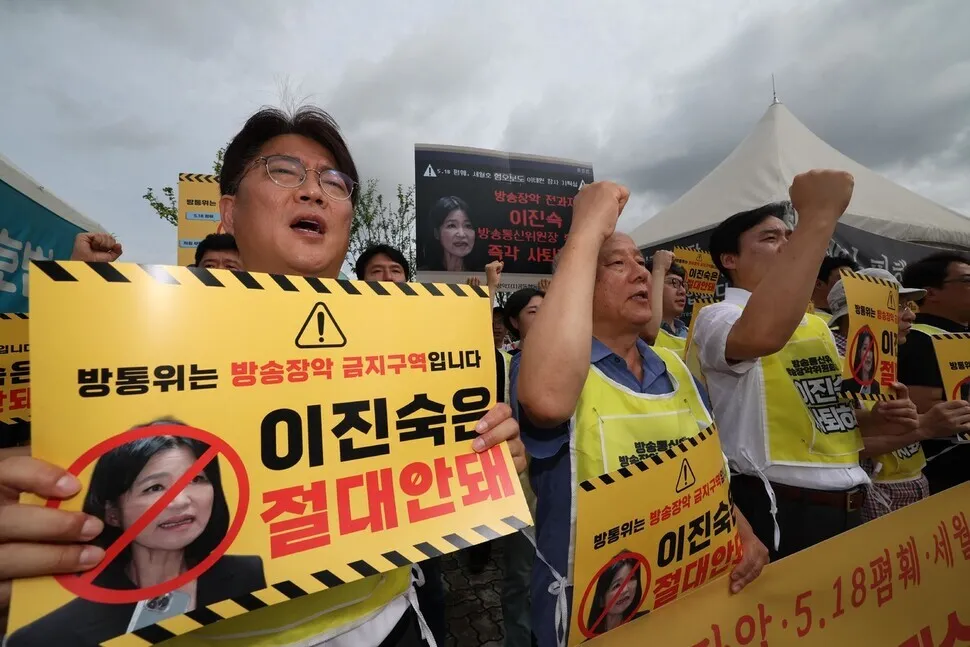
Yoon administration’s attempts bend the press to its will reach new heights
2024 was also a year in which the Yoon administration’s attempts to take control of the press reached new heights. Hwang Sang-moo, a former senior secretary to the president for civil affairs, drew heat with a veiled threat to MBC journalists in referencing a 1988 stabbing of a journalist while talking about how journalists critical of the government could “face consequences.” On Feb. 7, the Korea Communications Commission unilaterally signed off on the privatization of news broadcaster YTN, and with Ryu Hee-lim at the helm, the Korea Communications Standards Commission’s election broadcast deliberative commission for the April legislative elections slapped MBC with a whopping 17 legal sanctions.
On the day that she took office as the chief of the Korea Communications Commission (July 31), Kim Jin-sook attempted to swap out the boards of the Foundation for Broadcast Culture, the majority shareholder in MBC, and other public broadcasters nearing the end of their term (Aug. 12). That resulted in lawmakers passing a bill for her impeachment, suspending her from office, within a matter of two days. The appointment of new directors for the Foundation for Broadcast Culture was paused by the courts (Aug. 26).
Finally, while declaring martial law on Dec. 3, President Yoon Suk-yeol declared that “all media and publishing are subject to the control of the martial law command,” but this measure, too, failed to work as intended.
By Choi Sung-jin, staff reporter
Please direct questions or comments to [english@hani.co.kr]

Editorial・opinion
![[Editorial] Head of USFK continues to cross the line with inappropriate political remarks](https://flexible.img.hani.co.kr/flexible/normal/500/300/imgdb/original/2026/0528/4817799568931091.jpg "[Editorial] Head of USFK continues to cross the line with inappropriate political remarks") [Editorial] Head of USFK continues to cross the line with inappropriate political remarks
[Editorial] Head of USFK continues to cross the line with inappropriate political remarks![[Editorial] A disgraced former president like Park Geun-hye has no place on the campaign trail](https://flexible.img.hani.co.kr/flexible/normal/500/300/imgdb/original/2026/0526/2117797859381587.jpg "[Editorial] A disgraced former president like Park Geun-hye has no place on the campaign trail") [Editorial] A disgraced former president like Park Geun-hye has no place on the campaign trail
[Editorial] A disgraced former president like Park Geun-hye has no place on the campaign trail- [Editorial] Korea’s online hate problem calls for platform regulation and anti-discrimination law
- [Reporter’s notebook] Trump’s primary purge of ‘traitors’ won’t win him anything
- [Guest essay] Moscow-Pyongyang ties are rewriting security in NE Asia
- [Reporter’s notebook] Trump’s primary purge of ‘traitors’ won’t win him anything
- [Column] An incompetent ally is worse than no ally at all
- [Editorial] Samsung’s tentative bonus deal highlights need for profit-sharing rules
- [Editorial] Crisis averted at Samsung, but society must continue chip profit-sharing debate
- [Editorial] Seoul and Tokyo should focus on pragmatic cooperation, not countering China
Most viewed articles
- 1K-pop wins big at AMAs, with BTS taking home artist of the year
- 2[Editorial] Head of USFK continues to cross the line with inappropriate political remarks
- 3KFTC eyes criminal proceedings against Coupang founder over alleged false filings
- 4[Editorial] Samsung’s tentative bonus deal highlights need for profit-sharing rules
- 5[Editorial] Crisis averted at Samsung, but society must continue chip profit-sharing debate
- 6[Reporter’s notebook] Trump’s primary purge of ‘traitors’ won’t win him anything
- 7Ambassador denies Iranian involvement after Korea concludes ship was hit by Iran-linked missiles
- 8Lee pulls off pragmatic diplomacy balancing act between strongmen Trump and Xi
- 9Seoul stops short of naming Iran as attacker in strike on ship in Hormuz
- 10[Guest essay] Moscow-Pyongyang ties are rewriting security in NE Asia