hankyoreh
Links to other country sites 다른 나라 사이트 링크
[Editorial] Prosecutors’ selective outrage is self-incriminating
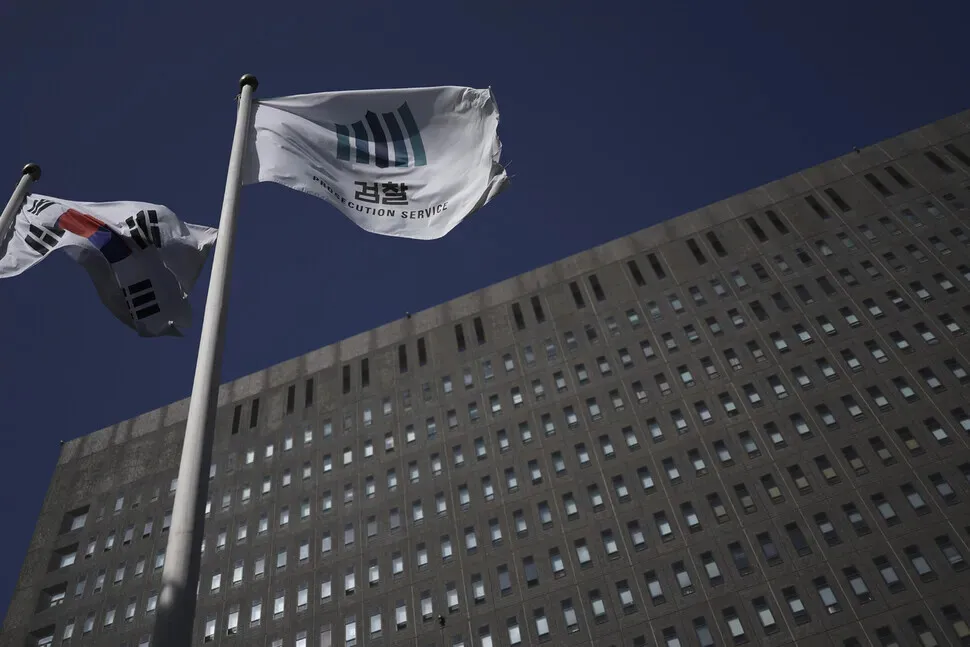
The Korean prosecution service’s decision not to appeal a court ruling in a high-profile corruption case with connections to Korean President Lee Jae Myung has prompted a revolt within the service, with directors of local branches issuing statements and rank-and-file prosecutors at the Supreme Prosecutors’ Office (SPO) pushing for the resignation of acting Prosecutor General Noh Man-seok.
Critics within the service claim the leadership’s decision not to appeal the Daejang neighborhood development case will deliver a “death blow” to the prosecution service’s reason for being.
But the Korean people have not forgotten that these self-same prosecutors remained silent over incidents more serious than this. It is doubtful whether the public will sympathize with collective action that is so selective without a trace of self-reflection.
Eight directors of local branches of the prosecution service released a joint statement on Monday. “Barring an adequate explanation of the reasons for not appealing the ruling [in the Daejang neighborhood development case], this decision will be remembered for dealing an irrevocable death blow to cherished values and the raison d’être of the prosecution service,” the statement said.
“That decision completely disregarded the opinions of the prosecutors who were responsible for the investigation and the trial. We call upon individuals in a position of responsibility to issue a reasonable explanation and adopt a posture befitting their position,” the eight branch directors said in their statement.
The branch office directors have a point here. If top prosecutors made a unilateral decision that disregarded the opinions of the prosecutors handling the case, it is only natural for the prosecutors to demand that their superiors offer a convincing explanation and take responsibility for the decision.
But why did the prosecutors not make such demands during the presidency of Yoon Suk-yeol, when there were any number of cases raising dire questions about “the raison d’être of the prosecution service,” to borrow their phrasing?
Given their current standards, surely these prosecutors ought to have risen up in righteous outrage when the prosecution service declined to indict then-first lady Kim Keon-hee despite the credible allegations against her and then opted not to automatically appeal a judge’s decision to cancel the detention of former President Yoon Suk-yeol on dubious chronological grounds.
The investigation and trial team for the Daejang development case objected that they “could not submit the appeal because of inappropriate orders from the leadership of the [Seoul] Central District Prosecutors’ Office and the Supreme Prosecutors’ Office,” but that is a lame excuse. If the team members deemed those orders inappropriate, they ought to have submitted the appeal with the court anyway.
Court precedent establishes that public servants cannot be punished for refusing to obey inappropriate orders from their superiors. If it had been necessary to appeal, submitting the appeal in defiance of their superiors’ opposition would have positioned the prosecutors as advocates of the public good.
In that sense, it was irresponsible and cowardly of Jeong Jin-woo, the head of the Seoul Central District Prosecutors’ Office, to first accept the orders of Noh, acting prosecutor general, and then to tender his resignation and claim his office had opposed the orders following pushback from others in the prosecution service.
Prosecutors have been quick to blow matters out of proportion in support of their claim that not appealing the court’s decision was inappropriate. They have been trying to whip up public support with breathless claims about being unable to recover criminal proceeds from the Daejang development scandal and about Lee, the president, gaining the advantage in his own pending cases.
With their current behavior, the prosecutors might as well be confessing that their investigations have been motivated not by jurisprudence but by politics all this time.
Please direct questions or comments to [english@hani.co.kr]

Editorial・opinion
![[Column] America is a wounded giant running amok](https://flexible.img.hani.co.kr/flexible/normal/500/300/imgdb/original/2026/0420/4217766778452401.jpg "[Column] America is a wounded giant running amok") [Column] America is a wounded giant running amok
[Column] America is a wounded giant running amok![[Editorial] PPP leader’s trip to US is a stunt without substance](https://flexible.img.hani.co.kr/flexible/normal/500/300/imgdb/original/2026/0417/4317764157621763.jpg "[Editorial] PPP leader’s trip to US is a stunt without substance") [Editorial] PPP leader’s trip to US is a stunt without substance
[Editorial] PPP leader’s trip to US is a stunt without substance- [Editorial] Remembering Sewol tragedy is how we prevent another
- [Editorial] Close communication with incoming US ambassador will be key for alliance
- [Editorial] World must stand against any and all tolls in Strait of Hormuz
- [Correspondent’s column] Trump’s real red line isn’t Iran’s nuclear program
- [Column] Who’s calling whom a rogue state?
- [Column] Xi Jinping exploits growing rift in Transatlantic alliance
- [Column] Trump’s war boomerangs on US hegemony and alliances
- [Column] Negotiating with bombs
Most viewed articles
- 1China sends warships past Yokoate after Japanese destroyer transits Taiwan Strait
- 2Visit by China’s FM put on hold after Seoul removes ‘China (Taiwan)’ from e-arrival cards
- 3The new class of neocons guiding Trump’s rampages
- 4Lee shuts down claims unification minister leaked US intelligence as controversy grows
- 5‘They know not what they do’: IDF sparks outrage after soldier smashes Jesus statue in Lebanon
- 6Accumulating grievances prompt US to restrict sharing of intel on North Korea
- 7Seoul reportedly cut off from daily US intel reports on North Korea for a week
- 8South Korea surges to world’s No. 4 arms exporter in 2025
- 9‘Peak hypocrisy’: Iran slams Europe for invoking int’l law in Strait of Hormuz initiative
- 10[Column] America is a wounded giant running amok