hankyoreh
Links to other country sites 다른 나라 사이트 링크
Moon Jae-in calls situation on Korean Peninsula “extremely troubling,” stresses dialogue
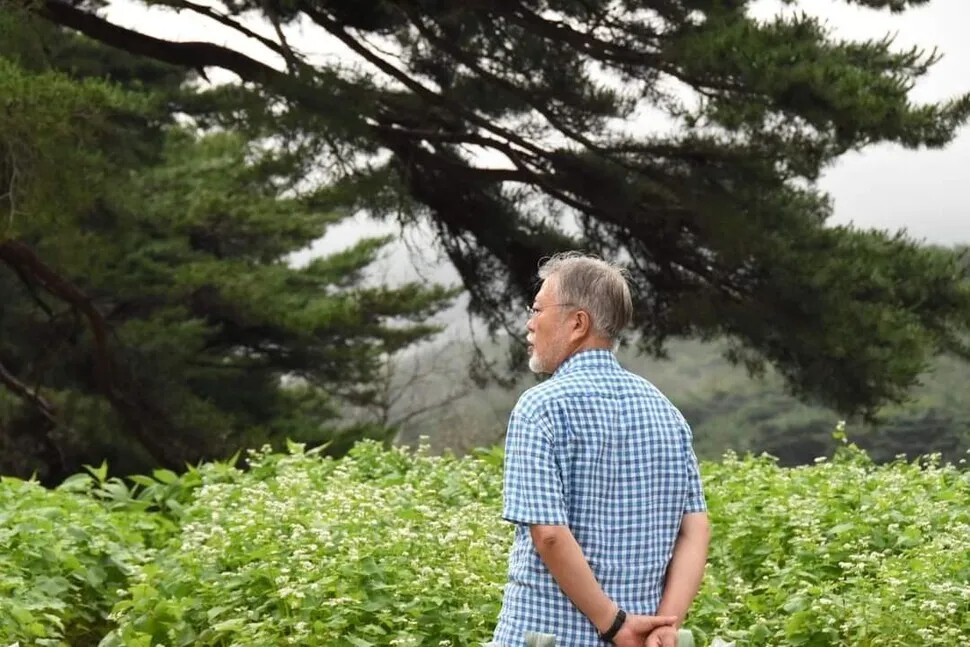
Former South Korean President Moon Jae-in described the current situation on the Korean Peninsula as “extremely troubling” and stressed that it “urgently demands efforts toward dialogue.”
In a congratulatory statement read on his behalf by Democratic Party lawmaker Kim Kyung-hyup while the latter was attending a Korea Peace Conference event held Tuesday by the Korean-American voters’ group Korean American Public Action Committee (KAPAC), Moon said, “At a time when uncertainties have grown in the international political situation, dialogue between North Korea and the US has not been restored, and military tensions are increasing by the day.”
“Moments like this call for us to stand firmer with the values of peace and urgently necessitate efforts in various ways to achieve peace on the Korean Peninsula,” he continued.
Moon also commented on the response to the Peace on the Korean Peninsula Act bill, which was supported by 44 members of the US House of Representatives with terms calling for a declaration formally ending the Korean War, the pursuit of a peace agreement, the establishment of a North Korea-US liaison office, and reunions among separated family members in North Korea and the US.
“I would like to give special thanks to the members of Congress who took part with their signatures,” he said.
“Peace on the Korean Peninsula is a path toward shared benefits that align with the interests of South Korea, North Korea, and the US alike, and a robust South Korea-US alliance is a key value for guaranteeing a Korean Peninsula peace process,” he also stressed.
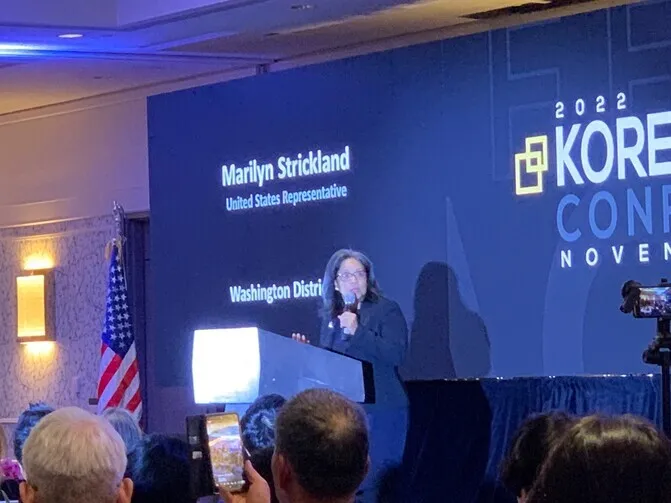
During the event at a hotel in Washington, DC, Rep. Brad Sherman, who spearheaded the bill’s presentation, said the legislation was unlikely to be passed by the current House, which finishes its current term at the end of the year, but pledged to continue working toward its enactment.
Responding to comments that the signing of a peace agreement would undercut the legal basis for stationing US forces in Korea, Sherman observed that US troops continue to be stationed in Germany and Japan today even after the signing of peace treaties with them to end World War II.
Among those attending the conference were House Foreign Affairs Committee Chair Gregory Meeks, House Judiciary Committee Chair Jerrold Nadler, and several members of Congress who signed on to the Peace on the Korean Peninsula Act. Nadler was also one of the signatories.
Other attendees included Korean American members of Congress Andy Kim, who was elected to a third term in the House in the midterm elections on Nov. 8, and Marilyn Strickland, who was elected to a second term.
Born to a USFK soldier father and a Korean mother, Strickland noted in a congratulatory address that she had been born in Seoul’s Yongsan area and lived in a very dangerous region just 30 miles away from the Demilitarized Zone (DMZ). In her remarks, she emphasized the importance of the Korean Peninsula, stressing that no one wants regional instability.
By Lee Bon-young, Washington correspondent
Please direct questions or comments to [english@hani.co.kr]

Editorial・opinion
![[Editorial] Top priority in North Korean POW case should be human rights, not politics](https://flexible.img.hani.co.kr/flexible/normal/500/300/imgdb/original/2026/0928/6117905733887763.jpg "[Editorial] Top priority in North Korean POW case should be human rights, not politics") [Editorial] Top priority in North Korean POW case should be human rights, not politics
[Editorial] Top priority in North Korean POW case should be human rights, not politics![[Column] Fixing the blurred border between South and North Korea](https://flexible.img.hani.co.kr/flexible/normal/500/300/imgdb/original/2026/0928/8617905750498627.jpg "[Column] Fixing the blurred border between South and North Korea") [Column] Fixing the blurred border between South and North Korea
[Column] Fixing the blurred border between South and North Korea- [Editorial] Shark sighting in Busan is a warning from nature
- [Column] Is AI about to destroy humanity?
- [Column] Harari’s 2030s: A new age of repressive desublimation
- [Guest essay] This Chuseok, think of the seasonal workers who plant and pick your food
- [Editorial] To build back public confidence, Lee must address issues affecting everyday Koreans
- [Column] Korea-Japan cooperation still has a long way to go
- Trump has taken a wrecking ball to America’s democratic institutions
- [Column] Sending troops to Hormuz would be a fatal miscalculation by Seoul
Most viewed articles
- 1Ukraine releases interrogation footage of captured North Korean soldiers, proposes prisoner swap
- 2Korea in talks to inject $10 billion into US nuclear reactor project this year despite still reviewing viability
- 3Seoul pushes back on Trump’s Alaska LNG claims, says investment must be commercially viable
- 4[Column] Fixing the blurred border between South and North Korea
- 5Less than half of South Koreans see need to reunify with North, survey finds
- 6Lee hails peace as ‘surest form of security’ on Korean Peninsula
- 7[Notice] Hankyoreh’s Asia Future Forum to explore ‘navigating the great upheaval’
- 8Korea’s monthly exports exceed $120 billion for first time in September
- 9Korea’s atrocities in Vietnam, in the words of those who saw and survived them
- 10Tensions mount over DMZ mine blast as North Korea alludes to military response