hankyoreh
Links to other country sites 다른 나라 사이트 링크
Why Korea may not be able to say no to Trump’s request for warships in Hormuz Strait
 Add as preferred source on Google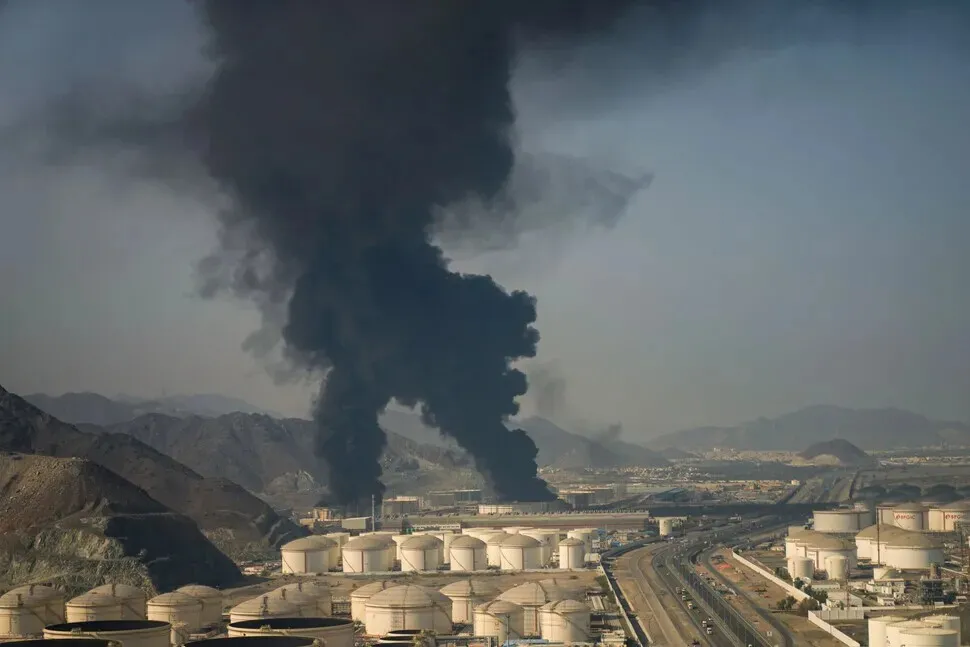
Seoul finds itself between a rock and a hard place after US President Donald Trump demanded that South Korea and four other countries deploy warships to defend shipping routes in the Strait of Hormuz. While the Korean public is largely opposed to sending soldiers into extremely dangerous operations in the strait, Korea’s need to sort out tariff negotiations with the US raises the stakes of saying no.
“Hopefully China, France, Japan, South Korea, the UK and others [. . .] will send Ships to the area so that the Hormuz Strait will no longer be a threat,” Trump posted on his official Truth Social account on Saturday (local time).
Iran has blocked passage through the strait and laid mines in the area. Believing that it will take more than US military muscle alone to protect vessels in the strait, Trump is calling for the formation of a naval coalition and demanding that countries such as Korea and Japan join.
Trump’s request has left the Korean government and Blue House flummoxed.
“We are paying close attention to Trump’s remarks,” the Blue House stated on Sunday. “We will maintain close communication with the US and meticulously review the matter before making any decisions.”
If the US makes an official request for troop deployment, the Korean administration is expected to consider dispatching the Cheonghae naval unit, which combats piracy and conducts maritime security operations in the Gulf of Aden, to the strait.
In January 2020, during the first Trump administration, the US requested Korea’s participation in an international coalition to escort vessels in the Strait of Hormuz following the assassination of Qasem Soleimani, a key commander in the Islamic Revolutionary Guard Corps. Instead of joining the coalition, however, the Moon Jae-in administration expanded the Cheonghae Unit’s operational area from the Gulf of Aden to the vicinity of the Strait of Hormuz, assigning it the task of escorting Korean vessels.
While the Moon administration faced criticism at the time for not obtaining National Assembly approval for the expansion of the unit’s operational area, which had been explicitly designated as the Gulf of Aden, the government cited a clause in the original resolution stating that “in the event of contingencies requiring the protection of citizens, the designated maritime area may be expanded to include other waters as directed.”
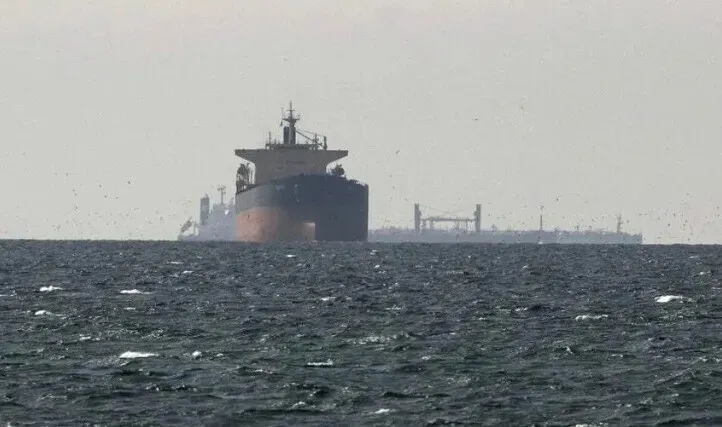
However, the current situation is different. While Korea’s operation in 2020 was an independent one, Korea may now find itself as a part of an international coalition in far more dangerous conditions. The fundamentally different nature of the mission could make obtaining the National Assembly’s consent a must.
“Participation in an international coalition is of a different magnitude from the expansion of the Cheonghae Unit’s operational area in 2020, meaning it will require approval by the National Assembly,” commented a high-ranking government official.
Participating in the coalition would also designate Iran as an adversary, which would come with its own diplomatic baggage.
“As this war was unilaterally initiated by the US and Israel, there is controversy over whether it violates international law,” said Cho Han-bum, a senior research fellow at the Korea Institute for National Unification.
The civic group People’s Solidarity for Participatory Democracy released a statement the same day, condemning the potential deployment of Korean troops. “Deploying troops to the Strait of Hormuz and intervening in a war of aggression are direct violations of our Constitution and international law,” the group said.
At the same time, Seoul is feeling the pressure from US tariff threats. Last week, the US announced that it was launching Section 301 investigations of 16 economies for manufacturing overcapacity.
“While there’s little justification for dispatching Korean warships, it may be difficult to refuse outright given the pending tariff and security negotiations,” said Cho Seong-ryoul, a visiting professor of military studies at Kyungnam University
For now, South Korea is waiting to see how the other countries singled out by Trump will respond to the demand to deploy ships to the strait, with Thursday’s US-Japan summit in Washington likely to be closely watched by Seoul.
“We will make a cautious decision while monitoring the situation in neighboring countries,” a senior Blue House official said.
By Seo Young-ji, staff reporter; Ko Han-sol, staff reporter; Jang Ye-ji, staff reporter
Please direct questions or comments to [english@hani.co.kr]

Editorial・opinion
![[Column] US isn’t pulling out of the Middle East — it’s being kicked out](https://flexible.img.hani.co.kr/flexible/normal/500/300/imgdb/original/2026/0812/4317865219661676.jpg "[Column] US isn’t pulling out of the Middle East — it’s being kicked out") [Column] US isn’t pulling out of the Middle East — it’s being kicked out
[Column] US isn’t pulling out of the Middle East — it’s being kicked out![[Editorial] Will shift in US nuclear strategy reintroduce tactical nukes to Korea, Japan?](https://flexible.img.hani.co.kr/flexible/normal/500/300/imgdb/original/2026/0807/6217860897464353.jpg "[Editorial] Will shift in US nuclear strategy reintroduce tactical nukes to Korea, Japan?") [Editorial] Will shift in US nuclear strategy reintroduce tactical nukes to Korea, Japan?
[Editorial] Will shift in US nuclear strategy reintroduce tactical nukes to Korea, Japan?- [Guest essay] Futures thinking in science fiction
- [Editorial] New US envoy must stick to her diplomatic mission
- [Editorial] Drone incident should serve as a wake-up call for US-Korea communication
- [Column] Lessons from the tragedy of the Donghak rebellion for regaining OPCON
- [Column] Can Korea advocate peace while selling weapons of war?
- [Column] The 40-year-old agreement haunting Korea’s booming semiconductor sector
- [Column] In an era of waning US hegemony, NE Asia needs the status quo
- [Editorial] The alarming prospect of more North Korean troops for Russia
Most viewed articles
- 1US defense policy chief calls notion of US-less middle power alliance a ‘delusion’
- 2Pro-Yoon pastor claims he was jailed for criticizing Lee administration — here’s the truth
- 3Coupang CEO Rogers files for sale of nearly $3.11M in company stock
- 4[Column] US isn’t pulling out of the Middle East — it’s being kicked out
- 5Zelenskyy says Russia used North Korean missiles in deadly strike on Zaporizhzhia
- 6[Editorial] Will shift in US nuclear strategy reintroduce tactical nukes to Korea, Japan?
- 7Another migrant worker dies in Korea’s heat wave. How many more deaths go uncounted?
- 8Real-life heroes of “A Taxi Driver” pass away without having reunited
- 9[Reportage] Francesca Hong, the Korean American democratic socialist winning over Wisconsinites, left and right
- 10[Guest essay] Futures thinking in science fiction